Back to Home
Compiled, HTML'd and Maintained by Mike Morris WA6ILQ
Formerly Maintained by Robert Meister WA1MIK
Currently Maintained by Mike Morris WA6ILQ

|
Up one level Back to Home |
Touchtone, Touch Tone, Touch-Tone, DTMF, Etc. Compiled, HTML'd and Maintained by Mike Morris WA6ILQ Formerly Maintained by Robert Meister WA1MIK Currently Maintained by Mike Morris WA6ILQ |
|
The two tone signaling system that we call Touchtone or now DTMF was first announced by the Bells system in January 1960 in the Bell System technical Journal (BSTJ) as "Pushbutton Calling with a Two-Group Voice-Frequency Code".
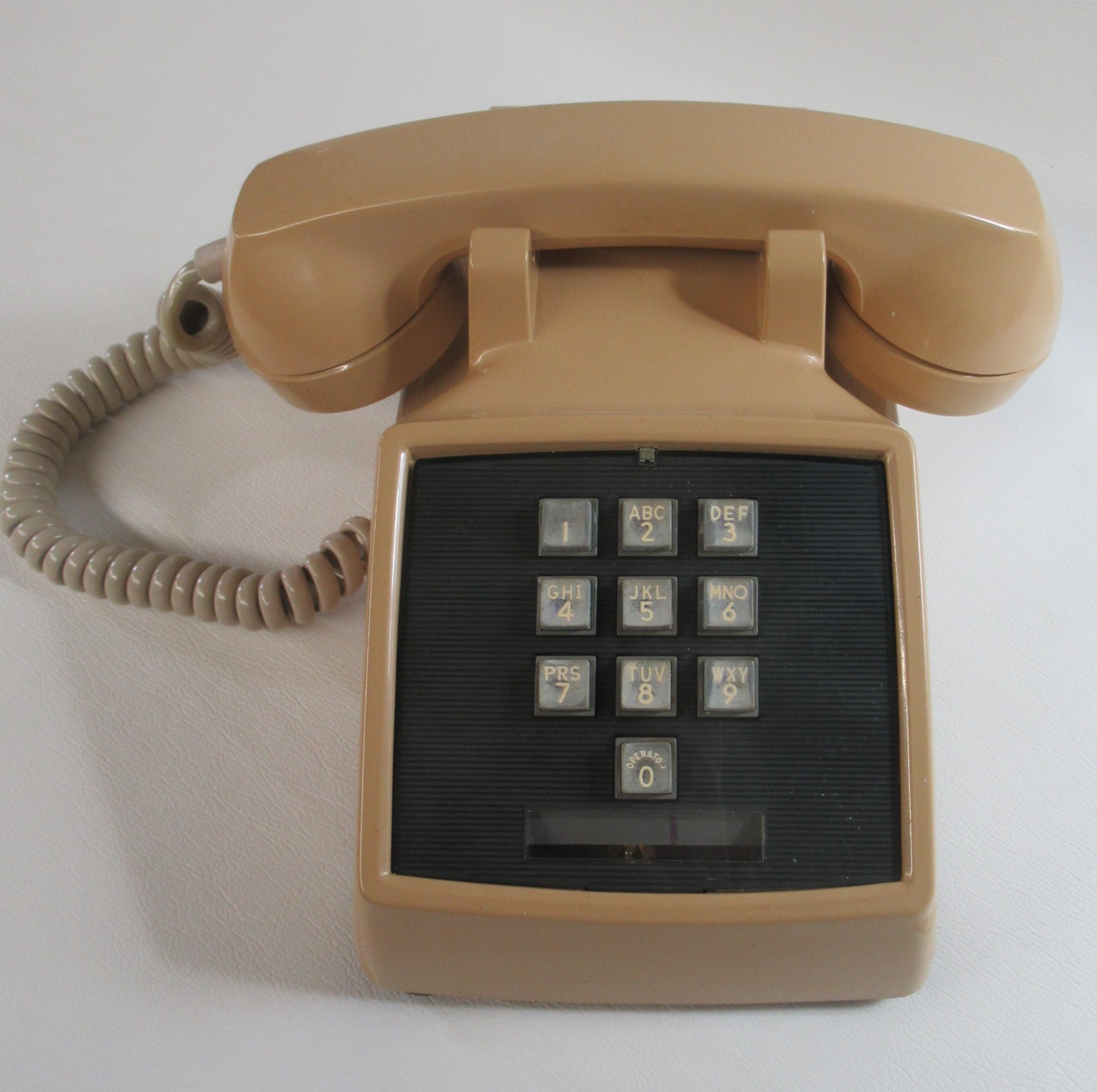
In 1963 the first modern Touchtone phone was introduced, the Western Electric model 1500. It had only ten buttons. Limited service tests had started in 1959, long before the service was made public. The Touchtone telephone was one of the big new things at the New York World's Fair of 1964-1965. At that time the country was obsessed with pushbuttons... push-button ovens, washing machines and even push-button automatic transmissions were announced.
Different Bell System press releases and various magazine articles used different spelling of "Touch Tone", "Touch-Tone" or "Touchtone" and all were trademarked. Due to these trademarked names the industry needed a generic non-trademarked name and the term "Dual Tone Multi-Frequency" (DTMF) was chosen. Most two-way radio manufacturers created their own names for DTMF microphones. For example, Motorola called theirs a "Touch-Code Encoder" Palm Microphone. It uses a National TP5089 IC. The data sheet (120kB PDF file) for that DTMF encoder chip can be found here.
The Bell System canceled the Touchtone trademark on 03-Mar-1984 (see this web page at the US Patents and Trademarks Office). The term "Touchtone" (and all the derivatives such as "Touch Tone" and "Touch-Tone") are now considered as being in the Public Domain.
Using audio tones for numeric signaling was not new - many years earlier Multi-Frequency signaling (MF) had been developed to allow telephone offices to communicate among themselves using "in-band end-to-end signaling" (using the voice bandwidth for control) over non-DC-current carrying links such as microwave, satellites or fiber. While both are based on a matrix keyboard the MF sytem used a different tone set than DTMF. The first public mention of MF that I've been able to locate was this article, from the Bell System Technical Journal (BSTJ) in November 1960... For more info on MF do a Google search on "blue box" and 2600 Hz for more details on the trunk switching tones and how they worked. You will find this article from the October 1971 issue of Esquire magazine (local copy in case that web site goes away) an interesting read... along with the rest of the story here (local copy in case that web site goes away).
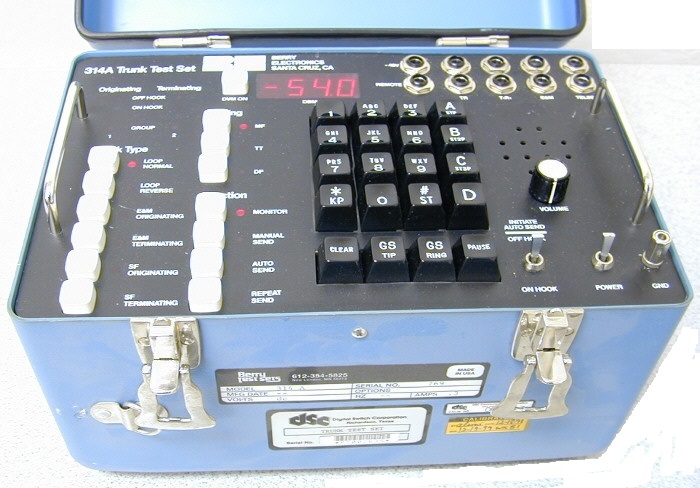
It's interesting that the above story dated from the late 1960s and early 1970s, and actual TelCo "blue box" test set - the the Berry Electronics Corp. Model 314A trunk test box - was not introduced and made available until 1978/79. I wonder if the Berry people knew what they were doing when they decided to put it in a blue box. You occasionally find a 314 or 314A test set on eBay (if anyone can provide a better photo please contact the page maintainer above). There is an interesting YouTube video here.
Don't bother playing with the MF tones today as all interoffice signaling has been moved out of the audio passband and onto dedicated data circuits - the last MF circuit in the USA was decommissioned in the mid-1990s. The replacement was "Signalling System 7", which has it's own set of problems.
Touchtone™ brought tone dialing technology to the consumer, using the experience gained from the inter-office MF technology however the engineers were not going to use the same tone set. As the story goes, over 15 different keypad layouts were tried and they chose one very similar to what is in use today ("*" and "#" were added), with the "1" in the upper-left and "0" at the bottom. The adding-machine layout (with the "1" in the lower left) was the second choice, but at that time (late 1950s / early 1960s) relatively few people had experience with an adding machine and having the "1" at the logical "start here" position of the normal English reading order had led to fewer errors during nationwide testing with what would be called "focus groups" today.
So the "Touchtone pad" replaced the rotary dial, which accomplished the signaling by interrupting the loop current and pulsing the phone line at a ten-pulse-per-second rate. This DC signaling method was adequate for the subscriber-to-local-office link to dial a telephone number, but didn't work for end-to-end signaling (i.e. for transferring data from one end of the call through an unknown number of switching offices to the other end). One example of end-to-end-signaling is dialing a phone number and then having to press 1 for english. Another is dialing a radio paging terminal, and then once the call is completed to be able to "dial" a pager number. Some literature refers to dialing digits after the call is completed as "overdial". I carried a pager on my belt for a number of years, and my parents would dial a local 7-digit number and then after the beep they'd press 14646 to pull my electronic chain. I'd pick up my handheld and dial the house number on the autopatch... Or they'd press 14646#9 and instead of "beep-beep-beep-beep..." from the pager I'd hear "bedee-bedee-bedeee-bedeee..." and I'd know to call my dad's office number at the photo studio.
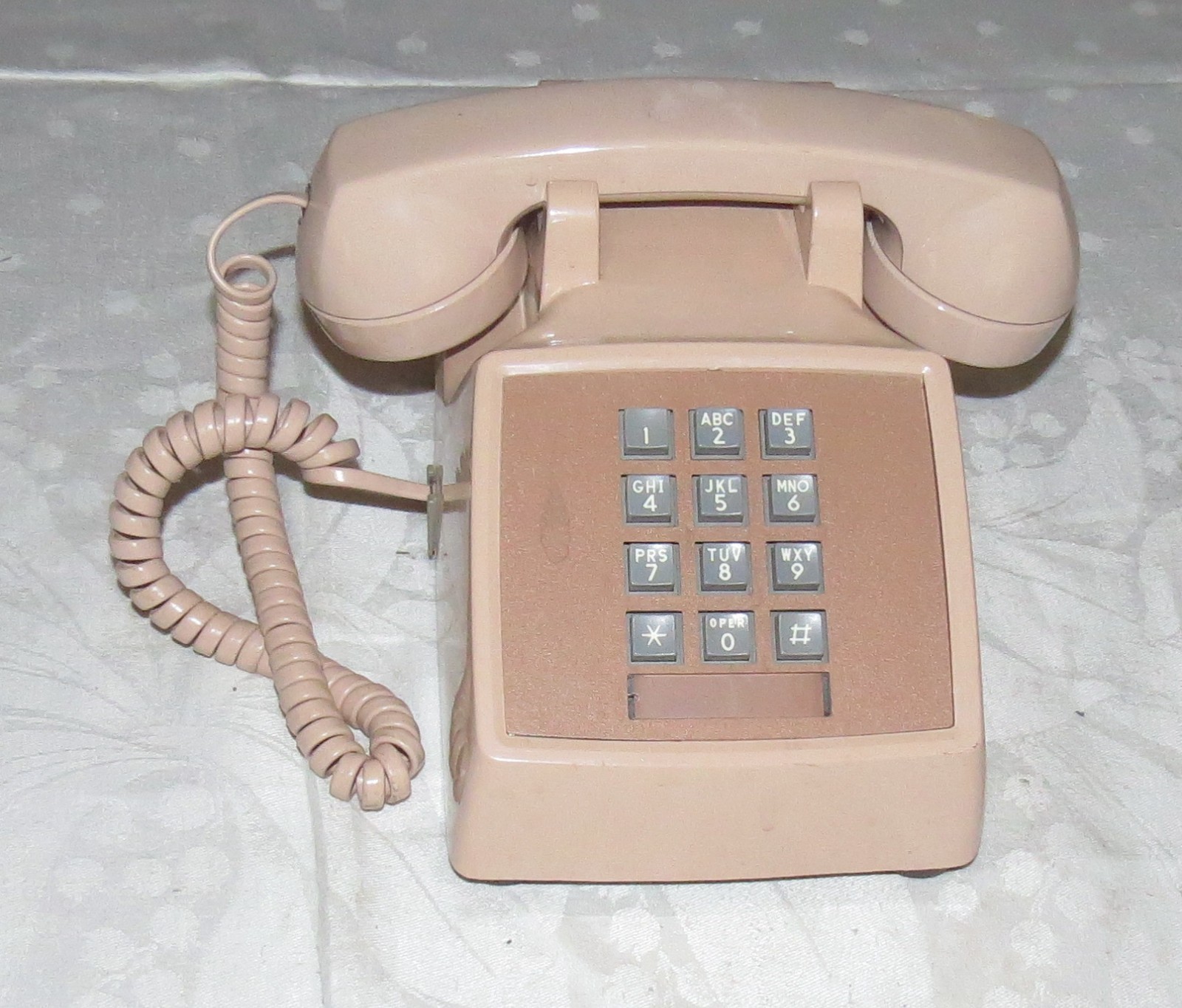
The consumer DTMF keypad is laid out in a 4 row by 3 column (4 column for military and special purpose phones) matrix, with each dial row selecting a low group tone frequency, and each dial column selecting a high group tone frequency. The original Touchtone dial was 10 buttons, the "star" (some telco literature called it "asterisk") and the "pound" symbols were added later, (see the section below on the "pound" symbol).
The original Touchtone keypads used mechanical switches that selected different taps on tuned coils, plus a set of "any button down" contacts that disconnected the microphone element (to prevent mixing background noise into the DTMF tones), connected the keypad to the phone line, reduced the audio level to the handset earpiece and enabled the audio oscillator (a clever design allowed one transistor to oscillate on two frequencies at the same time). See this article for schematics of the actual DTMF dial as well as a typical "2500" desk phone to see how they managed to make all of this happen at the touch of a button.
The overall effect was that pressing a single key (such as "1") will
send the mix of the two row and column frequencies (697 and 1209 Hertz).
Pressing two column keys (such as "3" and "6") would
generate just that column tone, pressing two row keys (such as "7"
and "8") would generate just that row tone.
An early reference book had a critical typographical error - the 1477 Hz tone was listed as 1447 Hz, and that error has continued in some documentation. Be assured that the third column is really 1477 Hz.
1209 Hz 1336 Hz 1477 Hz Optional Consumer Military 1633 Hz 697 Hz 1 2 3 A FO 770 Hz 4 5 6 B F 852 Hz 7 8 9 C I 941 Hz *
"star"0
zero#
"pound"D P
Obviously the row tones were called the "low group" and the column tones were called the "high group".
The term "twist" in the Telco community is used to quantify the difference in the levels of the low group and the high group. One of the causes of "twist" is the high frequency roll-off present in the telephone system due to capacitance in the overhead or underground cables. The high group of tones is sent 3 dB louder on purpose... when the audio arrives at the central office DTMF decoder it will be closer to even levels.
This built in tolerance for "twist" is useful in the DTMF-over-radio situation since a screw-up in the matching of the pre-emphasis and de-emphasis curves in the radio equipment. The pre-emphasis in the transmitter audio circuits raises the level of the high group of tones to a measurable amount above the level of the low group, and the receiver audio circuits is supposed to restore the audio to the level at which it was sent. If the audio levels are not correct it will be most noticeable on the "A" pair of tones. If the amount of twist is greater than the twist tolerance level of the DTMF receiver the system will fail to decode the button presses - and most users and system operators will blame the repeater controller manufacturer, not the user radio and the repeater receiver. And when the controller goes back to the manufacturer for "repair" he finds nothing wrong.
The tone frequencies used in DTMF were well thought out, and the DTMF specification
says that the frequencies generated must be with ±1.5%. From "Engineering
and Operations in the Bell System, 2e. (1984) p. 276"...
The tones have been carefully selected to minimize harmonic interference and
the probability that a pair of high and low tones will be simulated by the human
voice, thus protecting network control signaling.
Unfortunately while the tone frequencies used were well thought out, they were not thought out far enough. Any distortion between the source and the decoder will result in inter-modulation products being generated and the result will cause unreliable decoding. For example, use the classic 2A-B inter-modulation calculation: The "star" button is 941 and 1209 Hertz. Use 1209 for "A" and 941 for "B". Twice 1209 = 2418, minus 941 = 1477. The "pound" button is 941 and 1477. So any inter-modulation distortion in a transmission path can result in a star being decoded as a pound or even a simultaneous star and pound, if anything is decoded at all. This is one example why system designers have to keep transmission paths linear and distortion free. Otherwise the repeater system builders will blame the repeater controller manufacturer. And when the controller goes back to the manufacturer for "repair" he again finds nothing wrong.
Over the years, the real 16-button dials used different symbols on the key that is labeled "pound" on consumer phones. Some had a letter "A", some had the letter "C", they ended up using "pound" on the later ones.
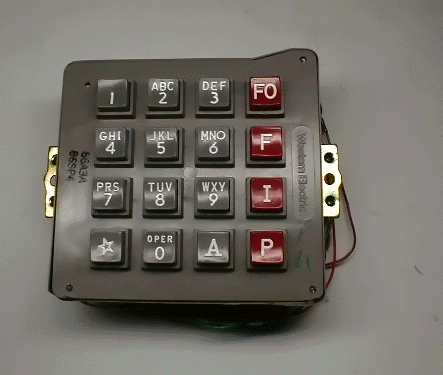
If you had one of these hooked to your MICOR or MASTR Pro mobile radio
back in the 1970s or 1980s you were one of the elite... you had to know
"someone" to acquire a 16-button pad. Or if you were tipped
off that Graybar stocked them then you could order a 66A3A, 66B3A or
66D3A or 66D4B from Graybar - 16-button keypads were in their industry
catalog for over a decade...
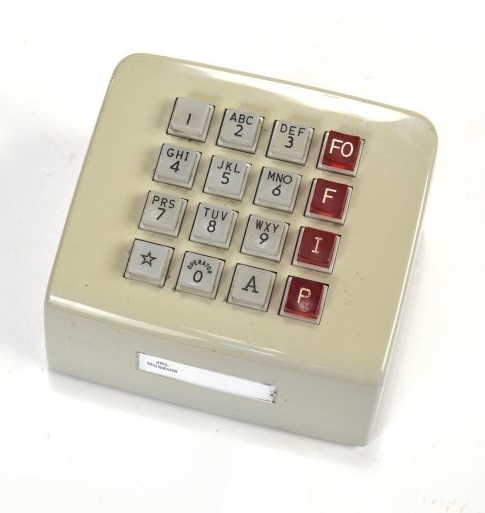
...as was the 1066B3, 1066D4, 5066B3 or 5066D4 "adjunct dial"... basically
a 16 button dial pad in a pretty desktop box.
BTW the 66A3A second photo above has solid buttons, the 66D4B pad in the above photo
has translucent frosted butons and could be backlit... handy for night driving...
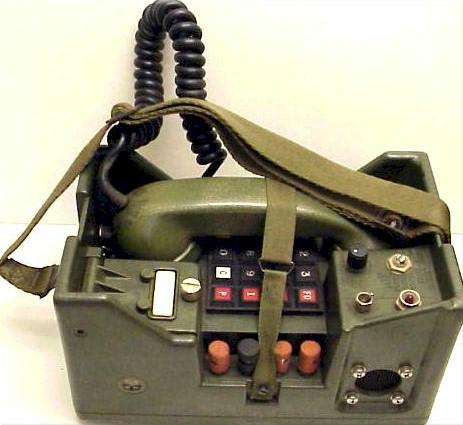
For years the military field phones used a "C" instead of a
"pound".... Not visible is the "A" where the
"star" is on a consumer phone.
And it's not common knowledge that the actual tone matrix is larger than four rows and four columns. If you extend the tone mathematical sequence (it's a 21/19 ratio) it works out to an 8x8 matrix. Yes, the Bell System / Western Electric engineers designed the Touchtone matrix to fit 64-buttons into the voice band and only the top left corner was ever implemented.
If you do the 21/19 ratio math the 8 rows are: (top to bottom) 697, 770, 852, 941, 1040, 1149, 1270 and 1404.
The 8 columns are (left to right) 1209, 1336, 1477, 1633, 1805, 1995, 2206 and 2438.
The controversy on the "Pound" symbol....
Unicode value: x'0023', ASCII value: 35 (decimal), Hex value 23
When the Touchtone dial was first introduced it was only 10 buttons, there was no "star" or "pound" symbols. Later on, the dials with 12 buttons appeared. There was no Bell System literature "naming" them, so lacking any official guidance, local names appeared.
The problem was, that there were lots of names.
It has many other names (and uses) in the English language. Some folks called it a crosshatch, a fence, a gate, a grid. Others called it a hash mark, a hash sign, or just "hash", which just happens to be how it is pronounced outside the USA.
The most common name in the USA is the "pound sign" (as in "Please press the pound
key") since it has been associated with "weight" for hundreds of years - Keith Gordon
Irwin in "The Romance of Writing" says (on page 125): "The Italian "libbra"
(from the old Latin word "libra", meaning "balance") represented a weight almost exactly
equal to the avoirdupois pound of England. The Italian abbreviation of "libbra" was "lb"
with a line drawn across the letters and was used for both weights (as in
lb
On the other hand, one of the international standards bodies settled on square as the official name in 1989, seemingly on the grounds that most languages have an equivalent in its vocabulary, so it could be easily translated. As a result, the British Post Office, then responsible for telecommunications, settled on square. Unfortunately, no one at that time seemed to have caught on that all of the 12 physical keys on most telephones are square, and the 12 keys of the keypad is a rectangle - a stretched square. Or the that the buttons on the 16-key pads made a square shape.
The pronunciation of "#" as "pound" is common in the U.S. but a bad idea as the UK has its own use of the phrase "the pound sign" (since the pound is a unit of their currency). The UK "the pound sign" is £ (if your browser displays it correctly). This confusion gets even worse, as on the common USA keyboard the "#" symbol is on the upper case "3" key, and on the the common U.K. computer keyboard the £ symbol replaces the USA "pound sign" on the upper case "3" key ! Two different symbols, with the same name, and on the same key position but with different meaning!
In Hebrew it is called "sulamit" (i.e., 'ladder').
Then there is the name octothorpe - there is even a web page on this - see http://www.worldwidewords.org/weirdwords/ww-oct1.htm.
Several names have come from the programming universe....
sharp, due to the resemblance to the glyph used in music manuscripts; so called
in the name of Microsoft's programming language, C#
hex from its use to denote hexadecimal values in some markup and programming languages; e.g., HTML and some scripting languages.
comment sign from its use in some programming languages, e.g. Perl, to introduce comment text.
And some folks just call it the tic-tac-toe / tictactoe symbol.
There were more culture wars over the correct pronunciation of this character than any other, which has led to the (only 1/2 serious) suggestion that it be pronounced "shibboleth" from Judges 12:6 in an Old Testament or Tanakh:
Judges 12
1: And the men of Ephraim gathered themselves together, and went northward, and said unto Jephthah, Wherefore passedst thou over to fight against the children of Ammon, and didst not call us to go with thee? We will burn thine house upon thee with fire.
2: And Jephthah said unto them, I and my people were at great strife with the children of Ammon; and when I called you, ye delivered me not out of their hands.
3: And when I saw that ye delivered me not, I put my life in my hands, and passed over against the children of Ammon, and the LORD delivered them into my hand: wherefore then are ye come up unto me this day, to fight against me?
4: Then Jephthah gathered together all the men of Gilead, and fought with Ephraim: and the men of Gilead smote Ephraim, because they said, Ye Gileadites are fugitives of Ephraim among the Ephraimites, and among the Manassites.
5: And the Gileadites took the passages of Jordan before the Ephraimites: and it was so, that when those Ephraimites which were escaped said, Let me go over; that the men of Gilead said unto him, Art thou an Ephraimite? If he said, Nay;
6: Then said they unto him, Say now Shibboleth: and he said Sibboleth: for he could not frame to pronounce it right. Then they took him, and slew him at the passages of Jordan: and there fell at that time of the Ephraimites forty and two thousand.
Contact Information:
The author can be contacted using the page maintainer contact above.
Back to the top of the page
Back to Tech Index
Back to Home
This page created Aug 2005.
Copyright Repeater-Builder 1994-2006, 2020.
This web page, this web site, the information presented in and on its pages and in these modifications and conversions is © Copyrighted 1995 and (date of last update) by Kevin Custer W3KKC and multiple originating authors. All Rights Reserved, including that of paper and web publication elsewhere.