| Back to Home |
The Motorola® Index Page Formerly Maintained by Robert Meister WA1MIK (SK) Currently Maintained by Mike Morris WA6ILQ This page has undergone a major reorganization. Everything is all still here; items just got moved. Use your browser's SEARCH function to find things, as they're now sorted better. |
Motorola was split into two different companies early in 2011:
Motorola Solutions - effectively the old Motorola: deals with land mobile / two-way radio equipment, Canopy Wi-Fi systems, and most things that are two-way radio related. If you go to www.motorolasolutions.com you are viewing the Motorola two-way (etc) company.
Motorola Mobility - essentially everything that was not land mobile / two-way radio related: cable TV boxes, cellphones, cellphone headsets, Lenovo-branded laptops, tablets and desktops, baby monitors (audio and video), cable TV modems and routers etc. This was the piece of Motorola that Google offered to buy in August 2011 for $12.5 billion. If you go to www.motorola.com you are viewing the Motorola Mobility web site. That web site has no concept of land mobile / two-way radio - not even a courtesy pointer.
Note: Any Motorola parts or manual prices mentioned on this page (or on any page at this web site) should be taken only as a rough guideline. Motorola adjusts prices quarterly, and offers one set of prices to their dealers / service shops (the so called "National Service Organization" ("NSO") Pricing), another to "self-maintaining" fleet customers (i.e. those that have their own radio shops... cities, counties, police departments, fire departments, etc) and a third set of prices on their telephone order desk (i.e. retail sales). For these reasons readers should use the prices mentioned in an article only as a rough indication - and remember that the prices mentioned were from when the article was written... repeater-builder.com has been around for over 20 years.
We'd appreciate an emailed update if you discover a major price change on any item, or if that item is discontinued / No Longer Available (NLA).
Note: This web site was created by USA residents and
mostly contains information and manuals on what equipment they have used, worked on, and
are familiar with. Some product lines were sold elsewhere unchanged except for the model
name or number. Others were customized to local needs, regulations or requirements.
Example: The euro equivalent to the "Professional Series" CDM mobiles and the
HT750 / 1250 / 1550 handhelds have 512k of firmware and
codeplug memory, not the 128k that is in the USA radios.
Repeater-builder would be happy to host articles covering the non-USA models, just contact
the page maintainer above.
Note: Many articles on this page (or on any page at this web site) mention manual numbers (Motorola sells their service and operators manuals through their parts system - each manual is classified as a "part" and has a part number). Those manuals were available at the time the article was written but may no longer be available the day that you read the web page. Motorola usually discontinues support for product lines that are over ten years old. This means no more parts and no more new manuals. If it's not available, you'll have to look for a used one being sold privately or on the popular auction sites. Newer product lines have only PDF manuals. Note that when you search for the manual part number for a paper manual (like 6881045E75-O) that the last letter is a version identifier - "O" for original (the first revision of the manual), then "A", then "B", etc. So when you search you will need to use an asterisk for the version letter... just delete the version identifier and look for 6881045E75*… You just might get lucky. If the seller does not include the manual part number then just google the radio name (like CM300 and don't forget to try the hyphenated version like CM-300) or the first part of the model number (like M50JNF*, or AAM50NJF* if you want to include the region code).
DONATIONS OF INFORMATION,
ESPECIALLY PDFs OF MANUALS WE DON'T HAVE WOULD BE GREATLY
APPRECIATED.
Just contact the page maintainer above.
Note: Repeater-builder has received a few emails asking about the GTR,
MX, SLR, XPR, XTS, XTL and APX series... anybody want to write something
on any of them? With credit or anonymous, your choice.
Just write it up in Word, send us some photos and we can do the HTML'ing, etc.
Please contact the page maintainer listed above.
General Information Pages and Articles:
It's probably wise to read some of this first, because it will answer a lot of questions that may pop up as you navigate to other pages and read other articles.

|
How to order manuals or parts from
Motorola by Mike Morris WA6ILQ. Some of the tricks I've picked up over the years... Some is dated (it was written around 2000), most is still valid. |
|
|
Figuring out what you
have by Mike Morris WA6ILQ. Cracking the model / ID number... with explanations of power levels, frequency bands, and a suffix table. |
|
|
Deciphering the
three-letter-and-four-digit part numbers by Mike Morris WA6ILQ. This web page is a compilation of the number breakdown table that was printed in four different vintages (1960s, 1970s and 1980s) of old Motorola Buyer's Guide publications. |
|
|
Deciphering the
first two digits of part numbers by Robert Meister WA1MIK (SK). A list of the parts categories from a 1976 Motorola Buyer's Guide. |
|
|
Cracking the Accounting Product Code (APC) This article decodes the first three digits of most two-way product serial numbers. Since the filenames from the saved codeplugs all start with the three digit APC number this table will help determine which radio that saved codeplug came from (example: both 310 and 320 are XTS5000). We'd love to have updates to this page as new numbers are assigned by Moto! |
|
|
Translating the battery date code by Mike Pugh KA4MKG This will help you determine when your battery was made, and if it is still in the warranty period. |
|
|
Determining Date of
Manufacture from the Serial Number by Mike Morris WA6ILQ This will help you determine when your radio was made. |
|
|
Touch Up Paint Colors by
Mike Morris WA6ILQ Motorola has offered spray cans of color matched paint in their parts catalog since the mid-1960s. This page was created in 2010 and is a list of the known colors and part numbers at that time, with a few notes on the usage and some alternate methods of color matching. Corrections, updates and additions are quite welcome. |
|
|
Radio Service Software (RSS) and the Radio
Interface Box (RIB) Some problems and some solutions... Compiled from information provided by several knowledgeable folks. Includes schematics of various RIBs. |
|
|
Some Thoughts on Radio Programming
Computers and Laptops by Mike Morris WA6ILQ If you do a lot of radio programming you might want to consider dedicating a laptop to radio programming. This article is an opinion piece and describes what the author uses and why… He prefers the CF‑30 and CF‑31 series Toughbooks because they are Mil-Spec rugged, cheap, configurable, repairable and have a 9-pin hardware COM port that always works. This is an opinion piece, different people have different needs… What works for him may or may not work for you… Still, you might find it interesting. |
|
|
The Motorola Test Equipment Page This page covers test equipment made by or for Motorola. Additions, corrections and updates are quite welcome. |
|
|
The Motorola Portable Test Set
Page Radio test sets, test boxes, metering kits and accessories. Information on several vintages including the P-8501, TU546, S1056, S1057, S1058, S1059 series, R1033, RTX4005 and several base station / repeater test sets. Also has diagrams of several portable radio test and programming cables. |
Motorola Product Line Specific Pages and Articles:
|
|
The CDM Series Index Page The CDM mobiles are the mobiles in the "Professional Series" of radios (they are also known as the "Waris" family of radios), hence this page has information relevant to the CDM750 / CDM1250 / CDM1550 mobiles and similar USA and non-USA Waris family radios and accessories, plus a few notes on the Professional Series / Waris handhelds (the HT750 / HT1250 / HT1550 and others). |
|
|
The "Commercial Series" Index Page (the CM200 / CM300 / PR400 mobiles, the CP150 / CP200 / PR400 handhelds and other similar models) This page also includes an article on how to stretch a 146-174 MHz radio down to 144 MHz (or a 465-495 MHz radio down to 462 MHz), and another article on how to modify your existing standard RJ-45 (8-pin modular) mobile radio programming cable so it works with the CM200 / CM300 / PM400 and similar radios. Note that after the modification your cable will be backwards compatible to the radios you already have. We'd love to have some additional contributions to this page! |
|
|
The Genesis series Index Page Information about the HT600, HT600E, MT1000, MTX800, MTX Classic, and MTX900 radios, chargers, batteries, and accessories. |
|
|
An Overview of the GP6x Series of
Handheld Radios by Mike Morris WA6ILQ. This series includes all of the GP6x series (including the GP68) plus the AP73 radios. |
|
|
The GTX Product Line Index Page Information about the 900 MHz GTX mobile and handheld, probably the fastest and easiest way to get on amateur 900 MHz. Service manuals can be found here. |
|
|
The Jedi Information Page This page has all the information we currently have about the various Jedi hndheld radios we are familiar with, including the GP900, GP1200, HT1000, HT1100, JT1000, MT2000, MT2100, MTS-LS, MTX838, MTX2000, MTX8000, MTX9000, MTS2000, MTS2010, MTS2013, PTX1200, and the PTX3600. We'd love to have some additional contributions to this page! |
|
|
The MaraTrac and Radius M400 Index Page Articles and information on the MaraTrac and Radius M400 series mobile radios, including service manuals. |
|
|
The MaxTrac, Radius, GM300,
DeskTrac, and GR series Index Page This page has all the information we have about the various MaxTrac, Radius and GM300 mobiles including the Maxtrac, MaxTrac 50, MaxTrac 100, MaxTrac 300, Radius, M10, M100, M120, M130, M208, M214, M216 and GM300 radios, as well as the DeskTrac stations, the DeskTrac repeaters, the GR300, GR400 and GR500 repeaters. The radios are similar but they do have their differences. Service manuals can be found here. |
|
|
The MCS2000 Mobile Index Page This page has all the information we have about the various MCS2000 mobile radios. The MTS handheld has some similarities, especially in progamming. Some service manuals and major parts diagrams can be found here. We'd love to have additional contributions to this page! |
|
|
The MICOR Mobile and Station Index
Page - also available as www.micor.info This page has just about everything we have on the MICOR. The PURC was a Micor station customized for paging. The Micor-based Spectra TAC / Aux Receiver chassis is further down this page in the Spectra TAC section. The Micor-based Auxiliary Receiver chassis ("Aux Receiver", also called "Link Receiver") that were used in the MSF and PURC stations are covered in the MSF5000 and PURC5000 section. |
|
|
The Mitrek and Motrek Mobile
Information page This page convers the Mitrek and Motrek mobiles plus the table-top ("Super Consolette") base stations that use the Mitrek or Motrek mobile radios internally. Please see the MSR2000 Station page for the base station / repeater version of the Mitrek / Motrek. |
|
|
The MSF5000 and PURC5000 Station Index
Page This page is limited to the MSF5000 and related stations. The PURC5000 was an MSF5000 station customized for paging, frequently using a Micor-based Link Receiver on a different band. A lot of the information is for the VHF, UHF and 900 MHz equipment. Station manuals are on this page, as are articles dealing with the Micor-based Link Receivers. The original "PURC" station was MICOR-based and you should look there. |
|
|
The MSR2000 Station Index Page Articles and manuals related to the MSR2000 stations. |
|
|
The MT500 Handhelds and PT500 Packset Information page Information, manuals and more. |
|
|
The MTR2000 / MTR3000 Station Index Page Articles and manuals related to the MTR2000 and MTR3000 stations. |
|
|
The MX Handheld Series Information page The "MX Series" was first introduced in 1975 and includes several crystal based (actually channel element based) and synthesized handhelds and other products. The MX series receiver was probably the best handheld receiver made. This radio series included the MX300, MX310, MX320, MX330, MX340, MX350 and MX360 handhelds, the PX300 and PX500 packsets, the MTR300 firetower repeater, the "APCOR" emergency medical repeater, and several other products. We'd love to have some additional contributions to this page! |
|
|
Modifying a Nucleus II paging transmitter for analog modulation By Robert W. Meister WA1MIK (SK). |
|
|
PM1200 Notes By Robert W. Meister WA1MIK (SK) A collection of notes and tips about the PM1200 high-power low-band mobile radio. |
|
|
The Quantar and Quantro Station
Index Page A collection of information about the Quantar (standard) and Quantro (high power) base/repeater stations. Quantars are available on the secondary market and there is not a lot of information on them. We'd love to have some additional contributions to this page! |
|
|
The R100 and MCR100 Repeater Station Index
page These early wall-mount small repeaters came in VHF and UHF models. Most of the information on this page covers the UHF stations. You'll also find Instruction (service) manuals and other articles. |
|
|
An Overview of the Motorola R1225
Full Duplex Radio and Repeater Module By Mike Morris WA6ILQ The R1225 module came in four models: low and high power, VHF and UHF and was the heart of the GR1225 tabletop repeater and the RKR1225 rack mount repeater. The module was also the heart of the narrowband upgrade kit for the GR400 rack-mount and GR500 wall-mount packaged repeaters. There was also an Special Products suitcase repeater that was built around the R1225 module. Repeater-Builder is looking for the loan of the R1225 RSS / CPS manual (68-80904Z93) or even the entire HVN9054 programming kit so we can PDF it and make it available here. |
|
|
The Saber Handheld Information page Motorola has discontinued manufacture and depot service on this radio, and many police, fire and other agencies have surplused them. Here's an overview. |
|
|
An Overview of the SM50 and SM120 Mobile
Radios by Robert Meister WA1MIK (SK). Information about the VHF and UHF SM50 and SM120 mobile radios. Service manuals can be found here. |
|
|
The Spectra Radio Index Page Motorola has discontinued manufacture and depot service on this radio, and many police, fire and other agencies have surplused them. While Mike Blenderman K7IC's web site is the definitive resource web site on the Spectra radios, we have lots of good stuff here too. |
|
|
The Spectra TAC Receiver
and Comparator Index Page All of the information and articles relevant to the voting comparator and MICOR receiver-based Spectra TAC receivers and Auxiliary receivers can now be found on this page. Additional conversion information for MICOR receiver boards can be found on the MICOR page listed above. |
|
|
The Syntor, Syntor X, Syntor
X9000, MCX, MCX100, MCX1000 and Mostar Index Page Information, Modifications and manuals. |
|
|
Improve the XPR-8300
Cooling Fan Control by Bryan Dygert KC8LMI. Relocate the temperature sensor on this MOTOTRBO repeater to increase PA reliability. |
|
|
Interfacing the XPR8300 MotoTRBO
Repeater to a CAT-200B Repeater Controller by Robert Meister WA1MIK (SK). Probably would work the same with any controller. |
Miscellaneous Information Pages and Articles:
Articles in this section may cover specific radios mentioned elsewhere, or may be of general use when dealing with many Motorola products.
|
|
Pyramid Vehicular Repeater Interfacing and
Connection Information Compiled by Robert Meister WA1MIK (SK). Pyramid makes vehicular repeaters and they have a LOT of radio-specific interfacing and connection information contained in application notes. Most external repeater controllers require the same (or very similar) interfacing connections, so this is a good place to find info that has been proven to work in situations involving interfaacing to commercial radios. |
|
|
Info on the
T1480 series 4-can VHF-high duplexer / cavity filter panel 953 kB PDF
file by Eric Lemmon WB6FLY. This is the official Moto manual that covers the two-cavity and four-cavity filter panels and duplexers (T1481, T1482, T1485A, T1485AF, T1487A, T1487AF). |
|
|
Info on the T1500 series 4-can UHF
duplexer / cavity filter panel by Mike Morris WA6ILQ Includes official and unofficial T1500 documentation. |
|
|
A Photo Tour of the T1500 series cavities compiled by Robert Meister WA1MIK (SK). |
|
|
Using T1500 cavities for 420-450 or 900 MHz 35 kB PDF file by Joel Paladino N6AMG (SK) |
|
|
Motorola Channel Element information from International Crystal Manufacturing Company, Inc. |
|
|
Using the Motorola GR1225 or
RKR1225 as a Repeater or Full Duplex Point-to-Point Link By Don Blanchard WA7GTU. An overview of the GR1225 desktop repeater and interfacing it to the IRLP system. The RKR1225 is the same unit packaged in a rack-mount cabinet. Note there is a detailed overview of the R1225 module (the heart of the GR1225 and RKR1225) higher up on this page. |
|
|
Trunk-mount
Radio Antenna Jack Nut Wrench by Robert Meister WA1MIK (SK). Ever had to tighten or remove the SO-239 antenna connector on an older mobile radio? Usually it's an SO-239 with a round nut that requires a special spanner wrench to fit it. Here's an easy to make tool that will make the job a whole lot easier. Usable on MaraTracs, MICORs, Motracs, etc. |
|
|
The Remote-Mount Control
Cable Connector Virus by Robert Meister WA1MIK (SK). While this happened to some MaraTracs, it can also happen to a lot of other trunk-mount or remote-mount radios that have control head cables and connectors. This article tries to explain which came first: the bent pin or the bad cable connector. It shows the problem and how to fix it. |
|
|
Securenet Concepts 467 kB PDF file The ABCs of Motorola's Securenet digital voice encryption system. |
|
|
Making your own
TRN4224A PL tone plug by Mike Morris WA6ILQ. This device is used in several mobile radio internal PL boards (i.e. Mitreks, Syntors, Maxar, Moxy, etc.), Systems-90 multi-PL mobile encoders and some other models. This article is oriented towards the Mitrek and the HLN4181 tone board since the author first ran into the TRN4424 when modifying a Mitrek that had an HLN4181 in it. Despite that, this information is valid for any equipment that uses the TRN4224 plug-in tone element. |
|
|
Making your own
TRN-6005A DPL code plug by Jerry Matthews WAØUZI. A TRN6166A/B quad DPL board for a MICOR base station is shown in the article, but the information and technique is universal to any equipment that uses the TRN6005 in the DPL board including Mitreks, Syntors, Systems-90 multi-DPL mobile encoders, the Spectra TAC Receiver, Satellite Receiver, Auxiliary Receiver, MSR2000 stations and others. This article also includes a table of standard DPL codes, both normal and inverted. |
|
|
Touch-Code mobile microphone modification
for 16-button operation 1.89 MB PDF file By Jim Reese WD5IYT (SK). Touch-Code is Motorola's trademarked name for DTMF (Touch-Tone). Jim walks you through converting a 12-button microphone to 16 buttons. Remember: when you press the PTT button on these mikes you disable the DTMF pad. |
|
|
XTL-1500 Information Includes 900 MHz hex-editing specifically for CPS11 but should work with other versions. We'd love to have some additional contributions to this page! |
|
|
900 MHz Mods for Astro25
Radios by Lou Meiss WA6EPD Hex-editing R20.01.00 CPS for 900 MHz amateur coverage. A bit better than the info in the above article. |
|
|
Radio-to-RIB cables for the GM900,
MC900, GM1100, GM1200, GM2000, MCX1200, MCS2000, MCX2000, MC2100 series of
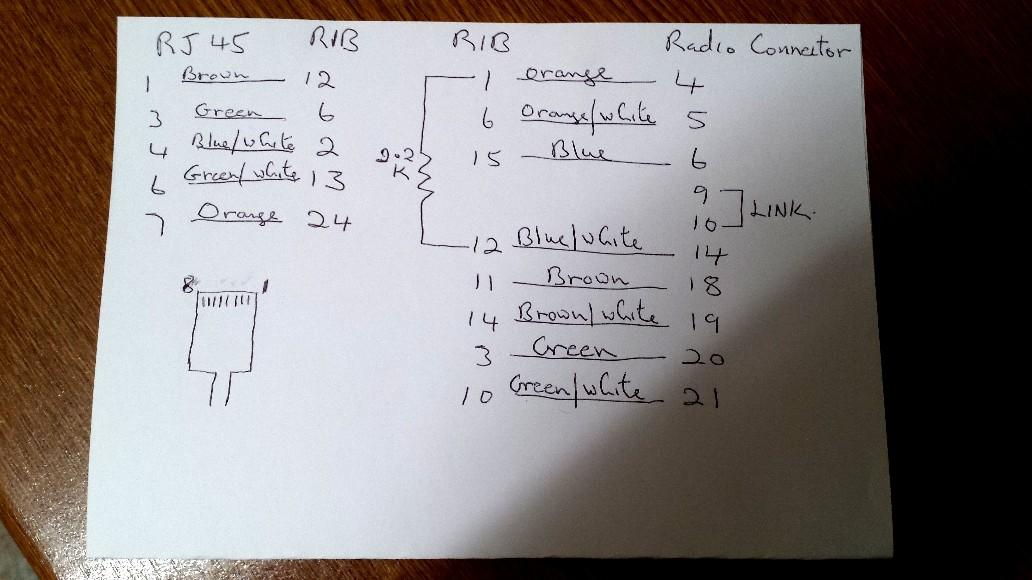
radios submitted by Herbie Graham GI6JPO These radios can be programmed via their RJ45 microphone connector or DB25 accessory connector, so there are two cables. They work with real or copycat RIBs. |
|
|
Interfacing a Zetron Model 30
Worldpatch (Phone Patch) to a MotoTRBO Repeater 300 kB PDF file by Motorola Seems to be oriented towards the XPR series of repeaters. |
Power Supply Articles and PDF Files:
|
|
F2366A / F2367A Battery-Reverting
Desktop Power Supply 2.1 MB PDF file Donated by Eric WB6FLY, fixed up by Bob WA1MIK (SK). This supply is also known as the TPN1150A and is probably similar to the TPN1175A. Inside, the chassis is stamped TRN6663A. |
|
|
FPN5348A Switching Power
Supply 60 kB PDF file donated by Eric WB6FLY. Used by the Spectra desktop base/control station. |
|
|
HLN9455 Battery
Revert Accessory for the GR400, GR500 and GR1225 Repeaters 1.6 MB PDF file. This goes along with the Motorola HPN9041 power supply, which is essentially an Astron SL-15M power supply. |
|
|
HPN9005 Power Supply (made by Star-Werks) for the GR500 Repeaters 150 kB PDF file. |
|
|
HPN9033 Power Supply (made by Duracomm) for the GR1225 and RKR1225 Stations 1.5 MB PDF file. |
|
|
TPN1084A,B and TPN1088A,B Consolette
Power Supply 4.6 MB PDF file donated by Carl Beaudry VA2CMB This supply is used with the Mocom 70 and possibly other desktop stations. |
|
|
TPN1105
and TPN1106 Micor station supply (options C28, C29 and C38) 3.56 MB PDF donated
by Mike Morris WA6ILQ This is the switching supply for the Micor station. Option C28 added battery backup. Option C38 was C28 plus 120v/240v AC input. Option C29 added an audio alarm that the station was on battery - a 1400 Hz tone burst on the repeat audio. The battery charger can be configured for nickel-cadmium (nicad) or lead-acid batteries. The TLN4732A 9.6 volt regulator board and the TLN5299A 12 volt regulator board was also used on a number of other units, as was the TLN5329A alarm board and TLN5330 relay mounting that generated the "on battery" alarm. |
|
|
TPN1136A Power Supply and cables 460 kB PDF file Originally made for the Maxar and MCX100 series radios. |
|
|
TPN1136A Power Supply and cable 66 kB PDF file Originally made for the Moxy series radios. |
|
|
Motorola Desktop Power Supply Information
by Eric Lemmon WB6FLY. Schematic diagrams and load tests for the HPN1007A, HPN1007B, TPN1136A, TPN1144A, TPN1154A, HPN3000A, and VPN1013A 5-15 amp units. |
|
|
Improve the TPN1136A
and TPN1154A Power Supplies by Robert Meister WA1MIK (SK). After observing the dismal performance of the stock supply, a better and simpler circuit was designed to improve regulation. Includes load tests (run by Eric WB6FLY (SK)). |
Radio and Equipment Manuals and Guides:
Manuals for radios that have model-specific index pages above can be found in their respective areas. This section has manuals for older or less-popular models as well as a few radios that don't have their own index pages.
|
|
R2600
Service Monitor display conversion to LCD 2.45MB PDF This PDF article is a complete guide on how to convert the Motorola R2600 Service Monitor's Display to LCD - by Jack Davis K6YC |
|
|
AP73 Operator's Instructions 420 kB PDF The AP73 was a poorly done rehash of the GP6x series commercial handheld for the amateur radio market. The first few pages are a quick reference card. |
|
|
C74MSY
series Community Repeater Service Manual 12.6 MB PDF scanned and
donated by Eric Lemmon WB6FLY. This is the Motrac / Motran vintage base station (pre-MICOR) repeater. The C74MSB and C74MSY series were the base station version of the same radio and this manual will be very useful on those radios as well. Search hits: C24MSB C34MSB C44MSB C54MSB C64MSB C74MSB C24MSY C34MSY C44MSY C54MSY C64MSY C74MSY |
|
|
D33CMT Transistorized Dispatcher radio 6881018A95-B 7.2 MB PDF Photo This is the manual for the 1965 D33CMT series, a 15 watt, two channel pre-Motrac model. |
|
|
Desk Microphone (HMN3000B)
Manual 3 MB PDF This is the basic desk microphone that had an RJ45 plug on the cable end and was sold in multiple colors and under a half-dozen model numbers. The cable and plug were changed and it was sold under a bunch more model numbers. |
|
|
Flexar Base Station Service Manual 6881035E55-B 6.84 MB PDF |
|
|
Flexar Base/Repeater Station Service Manual 6881045E10-B 4.3 MB PDF |
|
|
GM Series Professional Radio
Selling Guide 6864114B38 1.7 MB PDF This sales guide is for the European market GM340, GM360, GM380 radios, which are similar to the CDM series. This is NOT for the GM300 products, which are similar to MaxTracs and Radius LRA series. |
|
|
GM Series Professional Radio
Basic Service Manual 6864115B51 1.5 MB PDF This BSM is for the European market GM340, GM360, GM380 radios, which are similar to the CDM series. This is NOT for the GM300 products, which are similar to MaxTracs and Radius LRA series. |
|
|
GP300 Service Manual 6880901Z93-C 6.5 MB PDF Donated by Eric Lemmon WB6FLY. |
|
|
GP640 User's Guide 6864110B24-A 2 MB PDF |
|
|
H23BAC,
H23BAM, P33BAC, P33BAM Handi-Talkie Instruction Manual 6.1 MB PDF
Donated by Eric Lemmon WB6FLY. These are the hybrid transistor and subminiature tube based high band pack sets (the "luggie-talkies" or "hernia-talkies") |
|
|
HT50 User's Guide 6881055C65 2.4 MB PDF |
|
|
HT750 / HT1250 / HT1550
Basic Service Manual 6880906Z54 5.2 MB PDF These are the "Professional Series" handhelds, part of the "Waris" family. The CDM series were the mobile radios of the same family. |
|
|
L1158 and L1159 MRTI
Service Manual 2.5 MB PDF Donated by Eric Vincent VE2VXT. The MRTI is a generic name for a line of Mobile Radio Telephone Interconnect units that was made for Motorola by another company - they were essentially a commercial autopatch unit. The MRTI units were an option starting with the MICOR stations. |
|
|
L3276 Tone
Remote Adapter Installation and Troubleshooting Manual 3 MB PDF
Donated by Jim K1VTY. The tone remote adapter lets you control a mobile radio at a remote location from a desktop console using high-level guard-tone signalling commonly used with full-size base stations. |
|
|
M1225 Service
Manual 6880904Z96-A 13.7 MB PDF Donated by Eric Lemmon WB6FLY. The 20-channel models can do channel steering, the 4-channel models can or can not, depends on the firmware. |
|
|
MC-Micro UHF Conventional
Service Manual 6884828D06-L 36 MB PDF This is the manual for what is commonly called the German MaxTrac. Two of these mobile radios were used in the German MC-Micro repeater, which was redesigned into the MCR-100 repeater which was redesigned into the R100 repeater. When the European MPT 1327 trunking system came along, the MC-Micro mobile radio was updated to support that mode. |
|
|
MC-Micro UHF Trunking Service Manual 6802900B04-A 20 MB PDF |
|
|
Motrac UHF
Consolette Service Manual 6881005E15-C 8.3 MB PDF Donated by
Eric Lemmon WB6FLY. This manual covers the L24MHB L34MHB and L44MHB series of tabletop base stations that were derived from the UHF MHT series Motrac mobile radio. This manual will also be useful on the later Motran based units (the MSN / MSB series). |
|
|
Motran
High Band Railroad Radio Service Manual 6881041A15-G 7.4 MB PDF
Donated by Eric Lemmon WB6FLY. This manual covers the R43MST and R43MSB series radios. |
|
|
Nucleus Paging Station
Installation and Operation Manual 6881002F05-O 1.8 MB PDF This is close to, but not quite the same as, the Nucleus II (Nucleus TWO). |
|
|
Nucleus Paging Station and
Nucleus II Paging Transmitter Menus 128 kB PDF These are the menu quick reference pages for both the Nucleus and Nucleus II equipment from User Guides 6881000F10-N and 6881000F80-A. |
|
|
PAC-RT
mobile extender manual 6881010C06-B 5.7 MB PDF This unit is commonly called a PAC-Rat, and it superceded the PAC-PL unit and was Motorola's answer to the mobile extenders made by Pyramid company. The RF module was an MH10 handheld less the plastic case. |
|
|
P43DEN
PT400 (10w) High-band Service Manual 5.6 MB PDF Donated by
Eric Lemmon WB6FLY. The PT200 was essentially an HT200 in a heavy duty plastic lunch-pail style box with a big battery and a half-decent antenna. CAUTION: The HT200 and PT200 / PT300 / PT400 are positive ground internally. DO NOT use both a cigarette lighter cord AND a mag mount at the same time on a negative ground vehicle or you will have an internal meltdown. |
|
|
P21DDC PT200 (1.4w) and P31DDC PT300 (5w) Low-band Service Manual 5.5 MB PDF Donated by Eric Lemmon WB6FLY. |
|
|
P21DDN PT200 (1.4w) and P31DDN PT300 (5w) Low-band Service Manual 8.6 MB PDF Donated by Eric Lemmon WB6FLY. |
|
|
P23DEN PT200 (2w) and P33DEN PT300 (5w) High-band Service Manual 9.3 MB PDF Donated by Eric Lemmon WB6FLY. |
|
|
Canadian
VHF PT300 (1.4w) Manual 6.7 MB PDF Donated by Eric Lemmon WB6FLY. This is for the CP23DDC and CP33DDC radios. |
|
|
P44SXS (UHF)
and P43SXS (VHF) Portable Repeater Manual 50.4 MB PDF Donated
by Tim Haake WAØTSY and scanned by Jacob Nagel ADØJA These are 8-channel crystal-controlled suitcase repeaters with digital voice protection (scrambler) capability, carrier squelch or PL, with a built-in duplexer and an 8 volt(!) internal battery backup. High and low power modes, 115 / 230vAC or 12 volt DC input. |
|
|
FMR-926-9 for the above P44SXS or P43SXS Portable Repeaters 3.5 MB PDF Donated by Tim Haake WAØTSY and scanned by Jacob Nagel ADØJA |
|
|
FMR-926A Issue 3 for the above P44SXS or P43SXS Portable Repeaters 4.9 MB PDF Donated by Tim Haake WAØTSY and scanned by Jacob Nagel ADØJA |
|
|
Remote Radio
Switch 6881071A85-G 5.3 MB PDF This is the manual for a rather unique special purpose receiver (model number C1186B, C1186C, C1240A, C1240B, C1242A, C1242B, C1243A and C1244A). |
|
|
Repeater Interface Communications
Kit (R*I*C*K) manual 6880901Z79-B 4.7 MB PDF Scanned and
donated by Charles Gleason KB4MDZ; cleaned by WA1MIK (SK). This is the basic repeater controller that was sold with the GR300 / GR500 packaged repeaters. It tied two mobile radios together as a repeater and can be configured for unidirectional or bidirectional operation. It does NOT have an internal IDer. |
|
|
SM50 and SM120
Service Manual 6880903Z45-A 24 MB PDF Donated by Eric Lemmon
WB6FLY. Broken down into four more manageable parts below. |
|
|
SM50 and SM120
Service Manual part 1 of 4 746 kB PDF Donated by Eric Lemmon WB6FLY. The index, model information, and sections 1 thru 3 of the manual, up to the schematics. |
|
|
SM50 and SM120
Service Manual part 2 of 4 8.6 MB PDF Donated by Eric Lemmon WB6FLY. Pages 1-17: VHF boards, schematics, and parts. |
|
|
SM50 and SM120
Service Manual part 3 of 4 8.3 MB PDF Donated by Eric Lemmon WB6FLY. Pages 19-35: VHF and UHF boards, schematics, and parts. |
|
|
SM50 and SM120
Service Manual part 4 of 4 6.5 MB PDF Donated by Eric Lemmon WB6FLY. Pages 37-53: UHF boards, schematics, and parts. Display boards. Microphone. Exploded views. |
|
|
SP50 Service Manual 6880903Z24-A 5.2 MB PDF Donated by Eric Lemmon WB6FLY. |
|
|
Spirit "M" series Owner's Manual 6880905Z70 541 kB PDF |
|
|
Touch-Code (DTMF) Microphone Manual 6881114E07-C 4 MB PDF Donated by Bob WA1MIK (SK). |
|
|
ASTRO XTL1500
Digital Mobile Radio Installation Manual Guide 6815851H01-O 4.2 MB PDF Includes documentation of the 26-pin accessory connector and its signals. |
|
|
ASTRO XTL1500
Digital Mobile Radio Control Head User Guide 6815850H01-T 3.9 MB PDF Includes quick reference cards. |
|
|
XTN Series User Guide
6864110R04 2.9 MB PDF The channel charts in this manual are also applicable to the Spirit M, GT and S series VHF and UHF handheld radios. |

|
There's about 1GB of additional Motorola documentation that was sent to repeater-builder anonymously on a DVD. It's stored at our sister-site that can be found here. |
If anyone wishes to donate additional manual scans or hard-to-get part numbers please let us know. We'd really like to get information (including parts lists, user manuals and programminh manuals) for the Saber, Astro Saber, XTL, XTS, MCS, MTS and APX series. Donations can be made anonymously.
Sales Brochures and Parts and Accessories Catalogs:
|
|
Motorola Catalog and
Price List (July 2005) 1.4 MB PDF More than you'll ever want to know. Accessories, Antennas, Batteries, Replacement Parts and Kits, Site Equipment, Test Equipment. Lists by part number. |
|
|
Motorola Catalog and
Price List (August 2007) 3.8 MB PDF More than you'll ever want to know. Accessories, Antennas, Batteries, Replacement Parts and Kits, Site Equipment, Test Equipment. Lists by part number. |
|
|
GP300 Parts
List and Accessories List 1.2 MB PDF The GP300 and the GTX handhelds use a lot of the same accessories, including batteries. |
|
|
GR1225 Brochure 152 kB PDF |
|
|
HT50 Brochure 1.1 MB PDF |
|
|
HT750/1250/1550 Brochure 1.1 MB PDF |
|
|
M1225 Sales Brochure 2.7 MB PDF |
|
|
MT1000 Parts List and Accessories List 1.2 MB PDF |
|
|
MT2000 Sales Brochure
83 kB PDF The MT2000 probably had the best receiver of the Jedi family of radios. The MX was probably the best handheld receiver, but it was crystal (actually channel element) controlled. |
|
|
MT2000 Parts List and Accessories List 1.4 MB PDF |
|
|
MTS2000 Parts List and Accessories List 1.98 MB PDF |
|
|
Saber Parts and Accessories List 3.0 MB PDF |
|
|
SM50 and SM120 Parts and Accessories List 187 kB PDF |
Miscellaneous Topics and History Articles:
|
|
Mike's Miscellaneous Motorola
Minutia A collection of information that used to be present on the
Motorola index page. Authored and compiled by Mike Morris WA6ILQ. If you thought you recalled seeing something on this index page earlier, it might have been moved to this new catch-all page. |
|
|
IMPRES Field Programmer User Manual 2.5 MB PDF file courtesy of Jacob ADØJA |
|
|
RLN-4150A 7.5 Volt Universal Battery Eliminator 1.4 MB PDF file courtesy of Jacob ADØJA |
|
|
Two-way Radio Encryption Modules Listed By Radio Series 26 kB PDF file dated 07/07/2007 |
|
|
20 kHz Spacing on UHF and Motorola Radios A brief history of the UHF 20 kHz spacing issues in southern California and how some radios deal with it. Compiled by Mike Morris WA6ILQ. |
|
|
The First Walkie-Talkie Radio
1.6 MB PDF, by Leonard H. Anderson, 25 June 2005 An affectionate look back in time and some thoughts about the first true fabled walkie-talkie. More on what would be considered portable radios than handheld radios, but still very interesting. |
|
|
A very interesting web page
on the history of Motorola Land Mobile radio Well worth reading - and yes, 33 MHz was once considered to be the ultra-high-frequencies! by Geoff Fors, WB6NVH (offsite link) |
|
|
The Mobile Telephone In Bell
System Service, 1946-1985 Another page from Geoff Fors, WB6NVH (offsite link) |
|
|
Mobile radio as used by the
California Highway Patrol from the 1960s to current Another page from Geoff Fors, WB6NVH (offsite link) |
|
|
California Highway Patrol Motorcycle
Radio History Another page from Geoff Fors, WB6NVH (offsite link) |
|
|
California Highway Patrol Radio 2001 Another page from Geoff Fors, WB6NVH (offsite link) |
|
|
California Highway Patrol Radio 2009
Touch screens while in pursuit? What ARE they thinking? Another page from Geoff Fors, WB6NVH (offsite link) |
Back to the top of the page
Back to Home
Motorola® and just about every radio model mentioned on this page or its articles are registered trademark of Motorola Inc. Logo image used with permission.
Trademarked names belong to the owner and no misuse, violation or infringement is intended. All usage on these web pages at this web site is for descriptive or educational purposes.
This web page, this web site, the information presented in and on its pages and in these modifications and conversions is © Copyrighted 1995 and (date of last update) by Kevin Custer W3KKC and multiple originating authors. All Rights Reserved, including that of paper and web publication elsewhere.